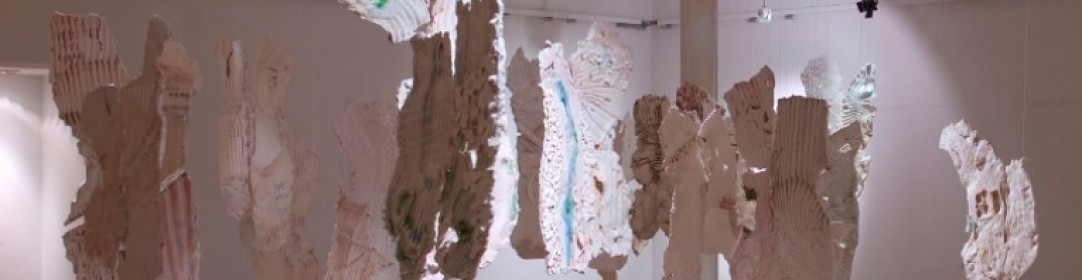
Archeology of Self: A Ceramic Installation
The Archaeology of Self is a collection of thirty-three large fired-clay sculptures suspended in space. They emerged from extended periods of direct observation of the female form, drawing both upon my own body and upon the young women who attended life classes at the University of Tehran during my research. The thirty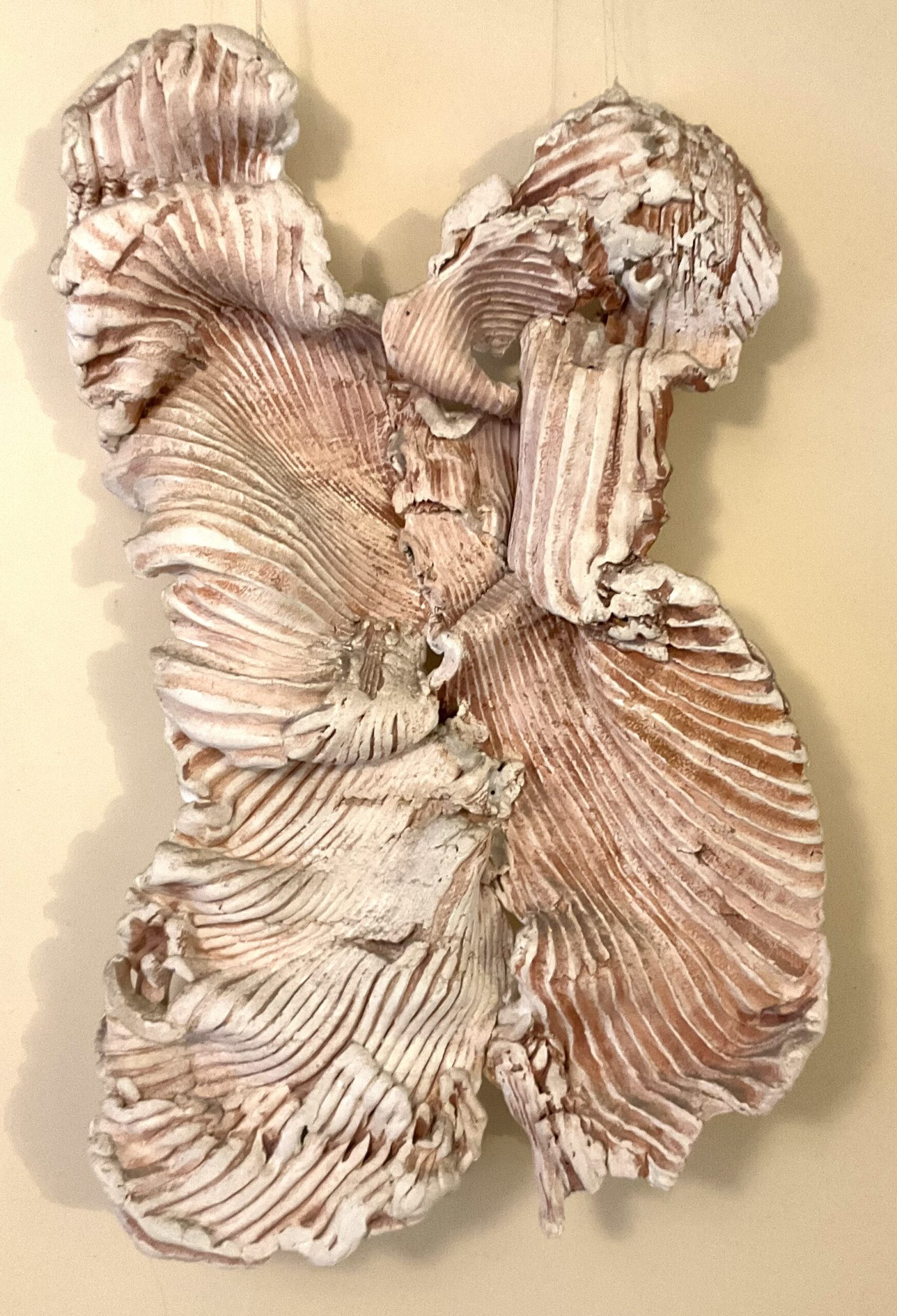 -three suspended forms carry a personal rhythm: an echo of the thirty-three prayer beads my grandmother held in her hand.
Conceptually, the installation interweaves traces and residues of my Persian literary heritage with physical and metaphysical evocations of women’s presence, endurance, and resilience. These ideas are deeply rooted in childhood experiences of family poetry recitations, where the power of language renders the realm of imagination both tangible and deeply felt. In creating these sculptures, I placed such ideas at the centre of my thinking, both in Tehran and in Canterbury.
The body and clay share elemental qualities: each embodies strength as much as fragility. The body has long fascinated me. As metaphor, it offers a fluid language of ideas; as form, it is the site of experience and the moving presence in space. It continually feeds my imagination. Whether fragmented or incomplete, the body retains both a physical and metaphysical presence that is also profoundly sensory. Clay likewise is a material of origins. It possesses a primal alchemy, warmt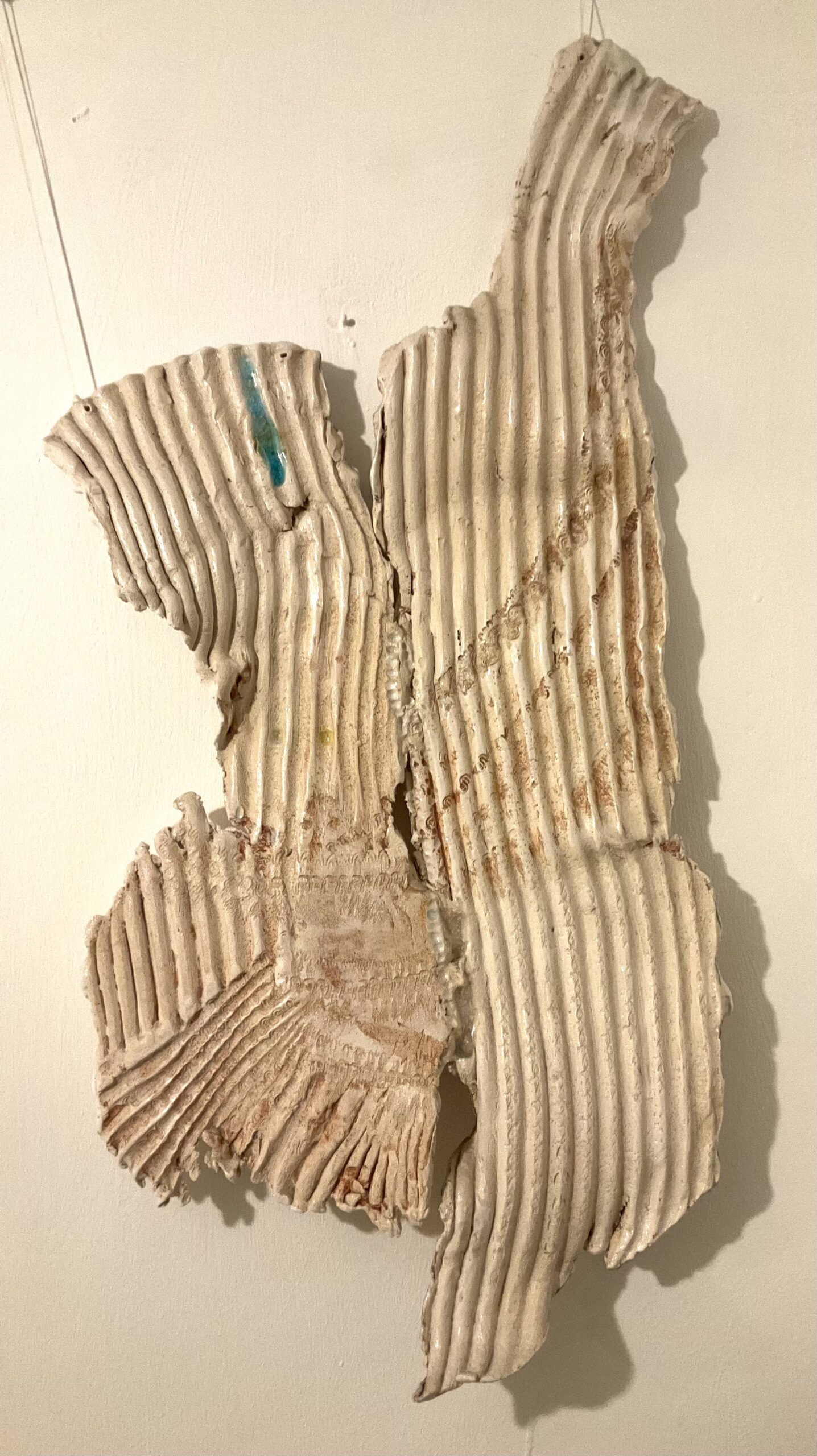 h, and an abstract expressive capacity. Its inexhaustible physical potential and intimate responsiveness to touch have always seemed deeply seductive to me.
The Archaeology of Self is emblematic of my psycho-geographies: the places I have visited and inhabited, and the women who have occupied those spaces across time. Suspended in space, the sculptures occupy an intermediate state, neither wholly grounded nor detached, inviting the viewer to move among them as if traversing a landscape of memory. The forms are deliberately simultaneously robust and delicate. Their surfaces accumulate deposits, abrasions, fissures, and excavated passages, so that making becomes an archaeological act. Rather than modelling complete bodies, I sought to reveal traces of experience embedded within the clay itself.
In Ancient Persia many women hunted, travelled, held court in their own right, served as independent working chiefs, or araššara. The Persepolis Fortification tablets, now held by the British Museum, record aspects of their lives through detailed allocations of wine, flour, beer, grain, and other provisions, revealing women as active participants in the economic and administrative life of th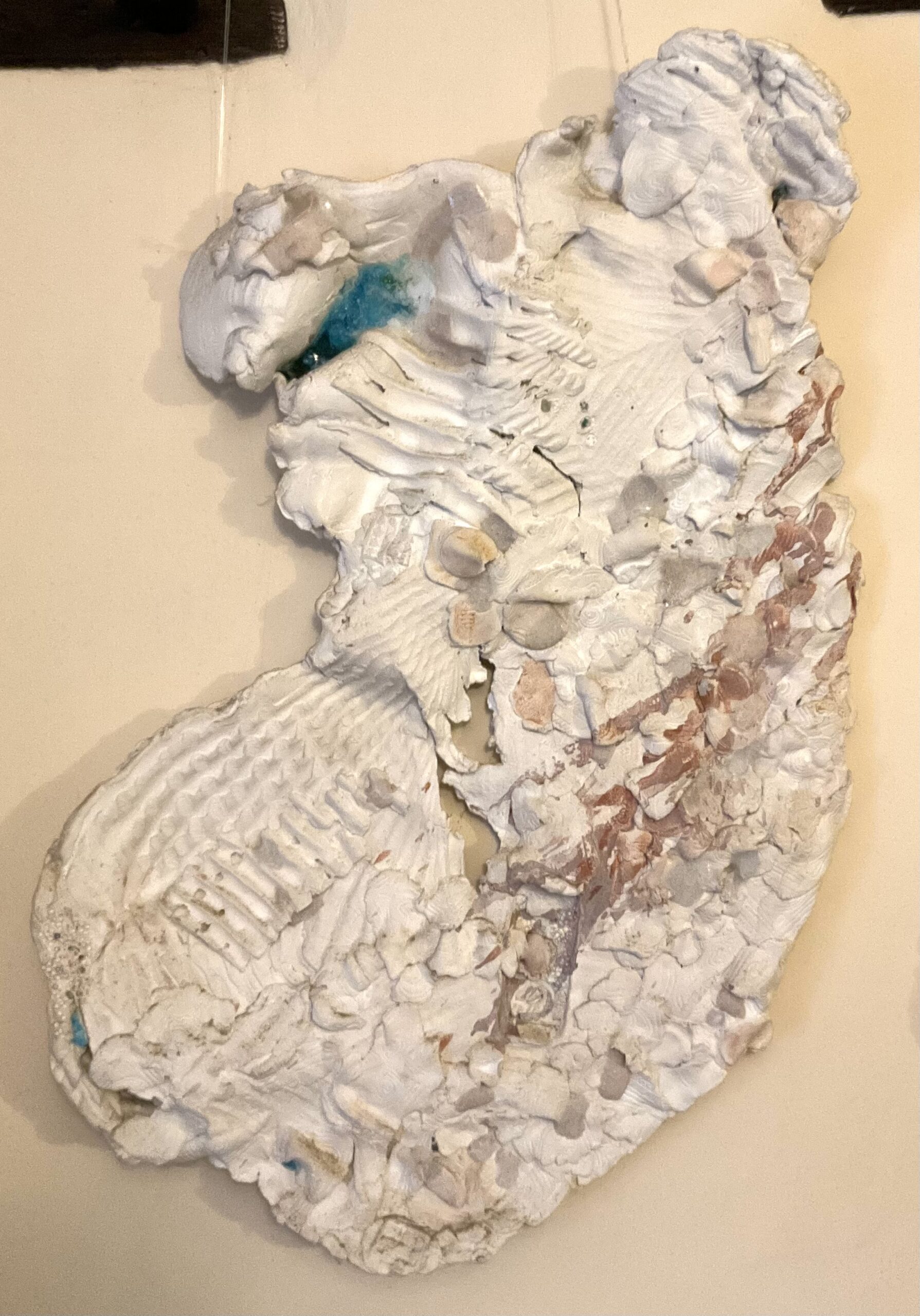 e empire. Much of their visual representation has been lost because it was often executed on a small scale and fashioned from precious metals and alloys. Yet their presence endures in material traces and historical memory. In our own time, the Woman, Life, Freedom movement has once again revealed the female body as the site upon which questions of identity, dignity, and political agency are inscribed. Although separated by more than two millennia, these histories are connected by the enduring capacity of women’s bodies to bear memory, embody resilience, and assert presence against erasure.
More detail here.